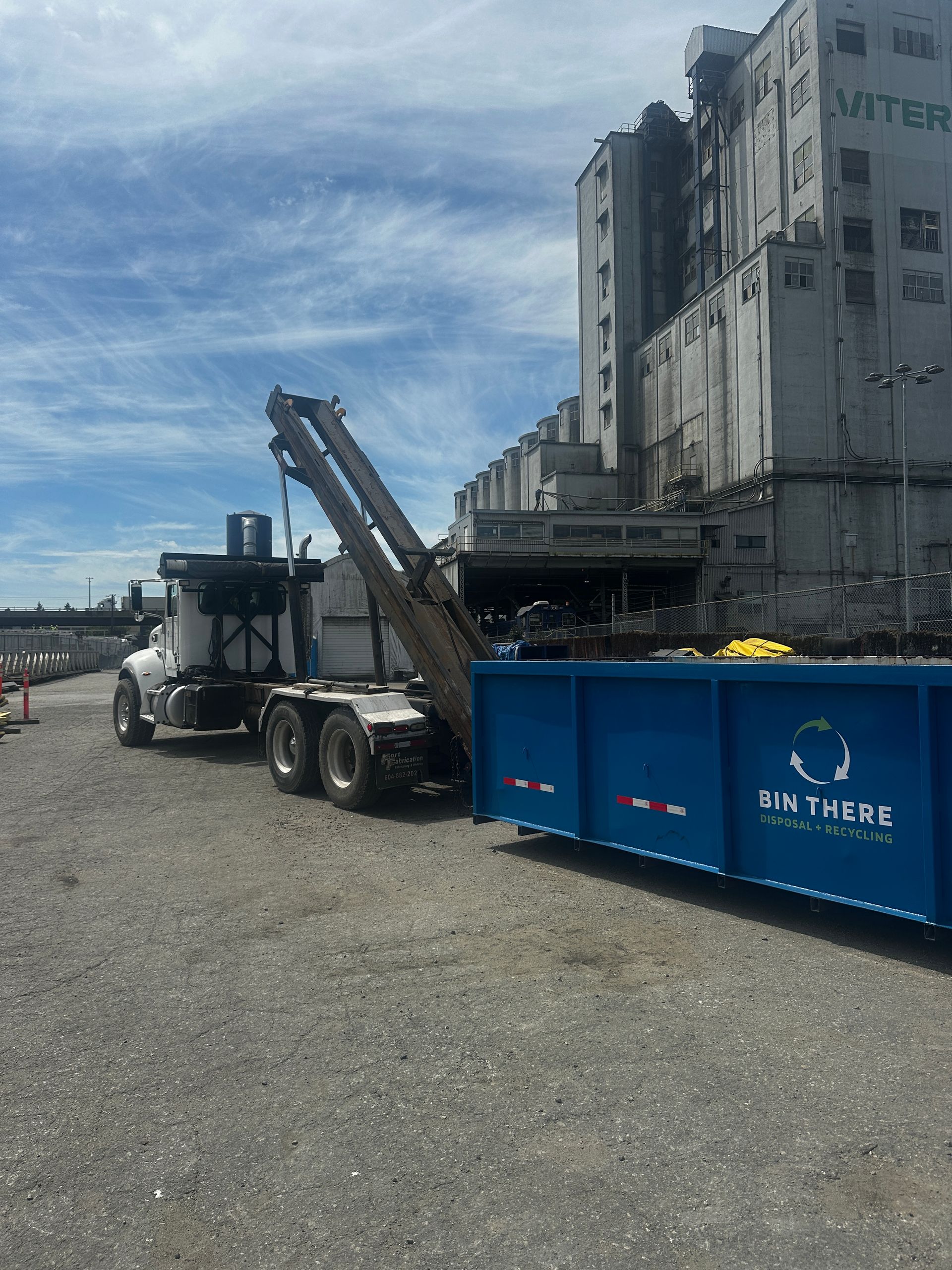
The Real Cost of Letting Renovation Debris Sit on a Vancouver Job Site
Bin There Disposal Services Ltd hears from renovation crews across Vancouver who assume that leaving debris on site for a few extra days will not make much difference to the schedule or the budget. In practice, a pile of debris that sits too long tends to cost more than the price of a bin swap once bylaw complaints, safety hazards, and lost crew time all factor in.
This guide looks at how sitting debris actually slows a crew down, what bylaw enforcement in Vancouver looks like for construction sites, the safety risks tied to debris left in place, and why timely bin rental ends up being the more affordable choice.
What You'll Find Below:
- Why debris left on site slows a crew down more than expected
- What bylaw enforcement actually looks like for Vancouver construction sites
- The safety risks tied to sitting debris
- Why timely bin rental is the more affordable choice
Slower Crews and Lost Productivity
A job site with debris piling up around it is harder to move through, plain and simple. Material stacked near work areas forces crews to navigate around it, slows down equipment access, and eats into time that should be going toward the actual renovation. On a paid crew, every hour spent working around debris instead of through the project adds directly to labour cost, even though nothing about the debris itself shows up on an invoice.
Bylaw Fines and Strata Complaints in Vancouver
Vancouver enforces bylaws around construction debris and property maintenance, and complaints from neighbours or a strata council can bring an inspection faster than most crews expect. A pile that sits visible from the street or a shared walkway is often what triggers the complaint in the first place, especially on multi unit or strata properties where sightlines and shared space are tighter. Roofing debris and drywall offcuts tend to draw the most attention, since loose material can blow around the site or track dust onto neighbouring walkways long after the actual work is done for the day.
→ From a professional standpoint: a bin that has been sitting full for days invites more complaints and more scrutiny than one that gets swapped on schedule, especially on strata and multi unit sites.
Fines vary depending on the property and the nature of the complaint, but the larger cost is usually the time lost responding to an inspection or a notice rather than the fine itself. A crew pulled off the work to deal with a bylaw officer or a strata board loses hours that were already committed elsewhere on the schedule.
Safety Hazards on an Active Site
Debris left in place for too long becomes a hazard beyond the obvious mess. Loose material creates trip risks for crews and visitors alike, piles near entry points can become fire hazards, and organic waste or food packaging left in a debris pile can draw pests. Exposed nails and broken material sitting in a pile for days also raise the odds of a minor injury that a same day cleanup would have avoided. None of this is unique to any one job, and all of it is avoidable with a bin schedule that keeps pace with the actual work.
Why Timely Bin Rental Is the More Affordable Fix
Weighed against fines, lost productivity, and safety risk, the cost of scheduling a bin swap before debris builds up is small. A bin swapped on a predictable schedule keeps a site looking active and maintained rather than stalled, which matters both for bylaw compliance and for how a project looks to clients, neighbours, and a strata council watching from next door. This holds true whether the job is a single family renovation in East Vancouver or a larger commercial fit out downtown, since the same complaints and the same lost hours apply either way.
Keeping a Vancouver Job Site Moving
A site that stays clear moves faster and draws far less scrutiny than one buried under its own debris. Schedule bin swaps with Bin There Disposal Services before debris backs up a site, and keep the project moving instead of paying for the delay.